
THE TRUTH ABOUT MARKETS: WHY SOME NATIONS ARE RICH BUT MOST REMAIN POOR
Capitalism faltered at the end of the 1990s as corporations were rocked by fraud, the stock-market bubble burst and the American business model--unfettered self-interest, privatization and low tax-…
- Edition
- -
- Call Number
- 330.122 KAY t

THE MARKET EXPERIENCE
In a period when market economics are widely recognised as the most desirable form of economic organisation, Robert Lane offers evidence that the major premises of market economics are mistaken. La…
- Edition
- -
- Call Number
- 330.122 LAN m

THE FREE-MARKET INNOVATION MACHINE: ANALYZING THE GROWTH MIRACLE OF CAPITALISM
Why has capitalism produced economic growth that so vastly dwarfs the growth record of other economic systems, past and present? Why have living standards in countries from America to Germany to Ja…
- Edition
- -
- Call Number
- 330.122 BAU f
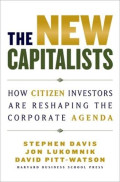
THE NEW CAPITALISTS: HOW CITIZEN INVESTORS ARE RESHAPING THE CORPORATE AGENDA
Thanks to the rise of mutual funds and retirement plans, the actual owners of the world's corporate giants are no longer a few wealthy families. Rather, they're the huge majority of working people …
- Edition
- -
- Call Number
- 338.6041 DAV n
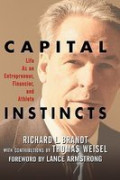
CAPITAL INSTINCTS: LIFE AS AN ENTREPRENEUR, FINANCIER, AND ATHLETE
An insider's view of the investment banking world from someone who is actually shaping it Powerful, controversial and determined, Thomas Weisel is known for his unwavering focus on winning the race…
- Edition
- -
- Call Number
- 332.1092 BRA c
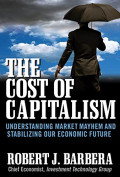
THE COST OF CAPITALISM: UNDERSTANDING MARKET MAYHEM AND STABILIZING OUR ECONO…
Examines the financial crises of the past two decades to offer an analysis of the current recession, and argues for a new economic paradigm that limits the potential mayhem of the free market witho…
- Edition
- -
- Call Number
- 338.543 BAR c

THE ECONOMICS OF BEING POOR
The Economics of Being Poor is mainly devoted to the economics of acquiring skills and knowledge, to investment in the quality of the population and to the increasing economic importance of human c…
- Edition
- -
- Call Number
- 330.0869 SCH e
UNDERSTANDING THE MARKET ECONOMY
This book is primarily concerned with describing the economic institutions and functions of market-oriented economies and the theories to explain them. This explanation is directed in particular at…
- Edition
- -
- Call Number
- 330.122 ISA u
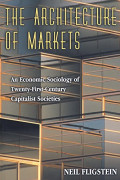
THE ARCHITECTURE OF MARKETS: AN ECONOMIC SOCIOLOGY OF TWENTY-FIRST-CENTURY CA…
Market societies have created more wealth, and more opportunities for more people, than any other system of social organization in history. Yet we still have a rudimentary understanding of how mark…
- Edition
- -
- Call Number
- 330.122 FLI a

THE ECONOMETRICS OF FINANCIAL MARKETS
The past twenty years have seen an extraordinary growth in the use of quantitative methods in financial markets. Finance professionals now routinely use sophisticated statistical techniques in port…
- Edition
- -
- Call Number
- 332.094 CAM e

 Computer Science, Information & General Works
  Philosophy & Psychology
  Religion
  Social Sciences
  Language
  Pure Science
  Applied Sciences
  Art & Recreation
  Literature
  History & Geography