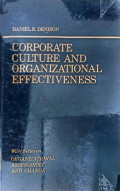
CORPORATE CULTURE AND ORGANIZATIONAL EFFECTIVENESS
Reveals the complex, interdependent relationship between an organization's corporate culture and its financial effectiveness, through analysis based on interviews, financial data, and case studies …
- Edition
- -
- Call Number
- 302.35 DEN c
SOCIAL PSYCHOLOGY IN ORGANIZATIONS: ADVANCES IN THEORY AND RESEARCH
The contents of the book are Chapter 1 Theory and Research in Social Psychology and Organizations Chapter 2 Sensemaking in Organizations: Small Structures with Large Consequences Chapter 3 Out o…
- Edition
- -
- Call Number
- 302.35 MUR s
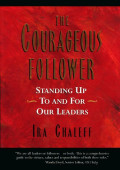
THE COURAGEOUS FOLLOWER: STANDING UP TO AND FOR OUR LEADERS
Many significant failures—from FEMA’s response to Hurricane Katrina to the recent economic collapse—could have been prevented or mitigated if those lower in the hierarchy were successful at c…
- Edition
- -
- Call Number
- 302.3 CHA c
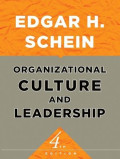
ORGANIZATIONAL CULTURE AND LEADERSHIP
Regarded as one of the most influential management books of all time, this fourth edition of Leadership and Organizational Culture transforms the abstract concept of culture into a tool that can be…
- Edition
- 4th Edition
- Call Number
- 302.3 SCH o 4th
ORGANIZATION THEORY: FROM CHESTER BARNARD TO THE PRESENT AND BEYOND
The contents of the book are Introduction by Oliver E. Williamson CHAPTER 1: Chester I. Barnard and the Intelligence of Learning by Barbara Levitt and James G. March CHAPTER 2: Symbols and Organ…
- Edition
- -
- Call Number
- 302.3501 WIL o
DESIGNING EFFECTIVE ORGANIZATIONS: THE SOCIOTECHNICAL SYSTEMS PERSPECTIVE
Many organizational designs are possible, and some are better than others. An effective organization produces excellent results by any standard measure while enhancing the energy and commitment of …
- Edition
- -
- Call Number
- 302.35 PAS d
KNOWLEDGE AND SOCIAL CAPITAL: FOUNDATIONS AND APPLICATIONS
Social capital - the informal networks, trust and common understanding among individuals in an organization - determines major competitive advantages in today's networked economy. Knowledge and Soc…
- Edition
- -
- Call Number
- 658.4 LES k
WORKING ETHICS: STRATEGIES FOR DECISION MAKING AND ORGANIZATIONAL RESPONSIBILITY
Illustrates how using ethics in decision making can improve communication, resolve disagreements, and set just standards for worker-management relations. Presents strategies for how organizations c…
- Edition
- -
- Call Number
- 174.4 BRO w
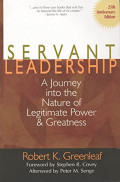
SERVANT LEADERSHIP: A JOURNEY INTO THE NATURE OF LEGITIMATE POWER & GREATNESS
With the publication of Servant Leadership in 1977, a new paradigm of management entered the boardrooms and corporate offices of America. Robert K. Greenleaf, a retired AT & T executive, proposed t…
- Edition
- -
- Call Number
- 303.34 GRE s
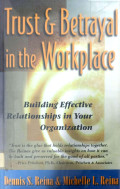
TRUST AND BETRAYAL IN THE WORKPLACE: BUILDING EFFECTIVE RELATIONSHIPS IN YOUR…
Trust is a key differentiator for high-performing organizations. It makes bold initiatives possible, difficult transitions easier, and everyday workflow more effective. Yet trust can be hard to bui…
- Edition
- -
- Call Number
- 158.7 REI t


 Computer Science, Information & General Works
  Philosophy & Psychology
  Religion
  Social Sciences
  Language
  Pure Science
  Applied Sciences
  Art & Recreation
  Literature
  History & Geography